

Omaha Plant Watering Guide
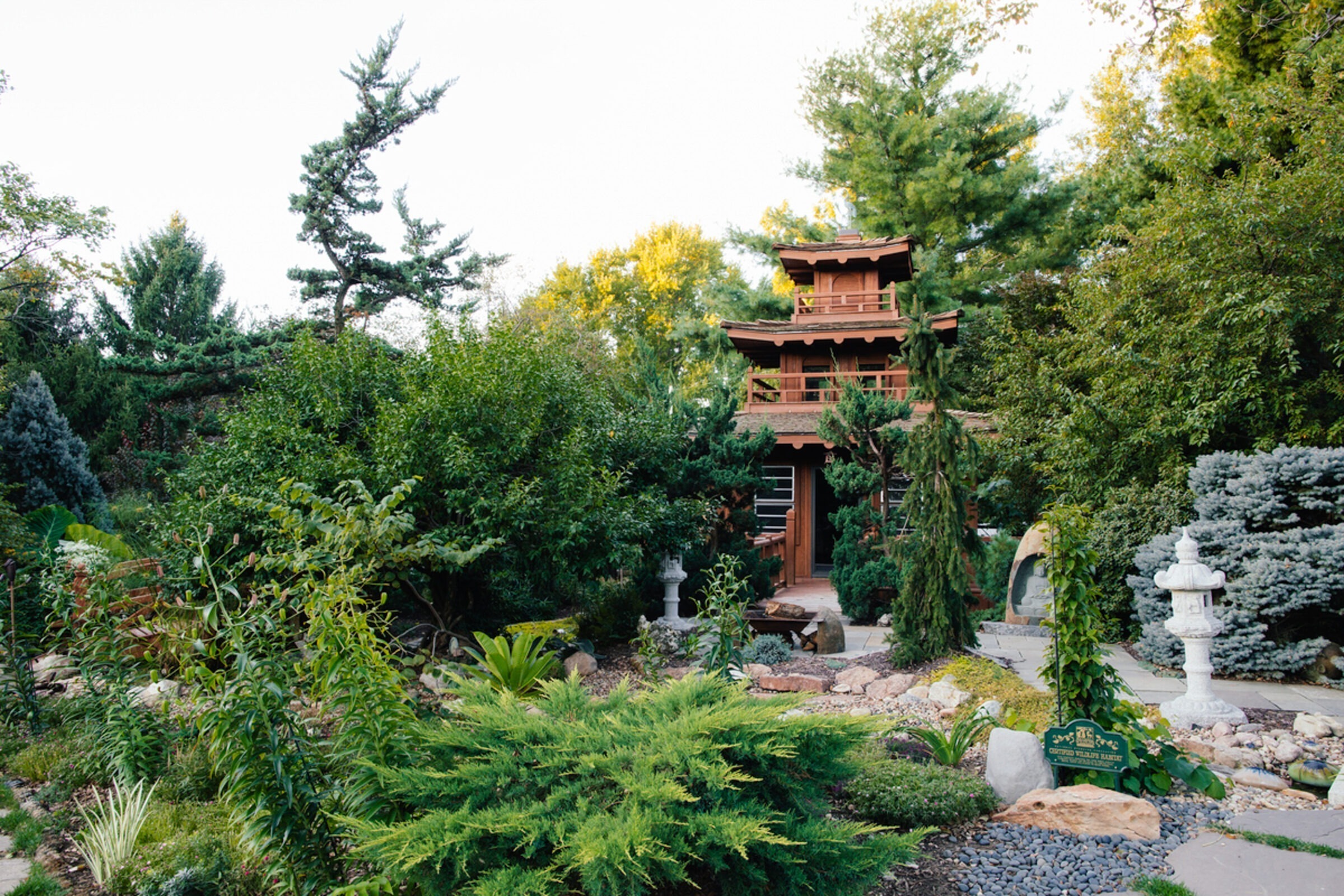
Plants and turf are living things that require special care. Once we have installed your landscape, added sod, or performed your service, you have the responsibility for the continued health and vigor of the planting.
The following general instructions will help you to maintain and enjoy your investment. You will also find information about our plant warranty program on this page.
This guide gives you detailed instructions on how to care for your plants, but we’ve also added this quick reference section for your convenience:
- Sod – water 3x per day for 15 mins at a time until the first mow
- Seed – water 3x per day for 5 mins at a time until the first mow
- Trees – water every 7 days for the first month, 10-14 days up to a year after that
- Shrubs – water every 5-7 days for the first 6-12 months
- Perennials – water every 3-4 days for the first 3-6 months
Plant General Care And Watering Instructions
Watering
Check all plants weekly. Check newly planted trees and shrubs every few days for the first two weeks. Thereafter, check every week to 10 days.
Simply dig around the root zone with your fingers to a depth of 2-3” for small plants and 6-8” for larger ones and trees. Water generously when the soil feels dry to the touch. A general rule of thumb: 3 – 4 days for perennials; 5 – 7 days for shrubs; 10 – 14 days for trees. Remember that Mother Nature can help with rain!
Slow, deep watering is preferred. This type of watering is accomplished by placing the hose at the base of a plant, at a moderate flow, and water 2 - 5 minutes for small plants, longer for larger plants, while moving the hose in a few locations around the plant. Trees may require 15 – 20 min. of watering.
When the soil feels moist, do not water. Soil must be allowed to dry out between waterings. If a plant is maintained in constantly moist soil, the plant’s health will deteriorate over time. A plant weakened by over-watering may die of oxygen deprivation or become susceptible to pests and disease. For this reason, lawn irrigation systems, if not designed correctly, can be hazardous to ornamental plantings.
Maintain a 2-2 1/2” mulch layer to help conserve ground moisture and prevent, to a degree, weed growth. Remember, excess amounts of mulch will result in poor air circulation and reduce plant vigor.
Fertilization
Newly installed plants have all the necessary nutrients, so generally no fertilizer is necessary for the first year.
In subsequent years, we recommend using a balanced (i.e., 10-10-10, 14-14-14) plant food (preferably with micro-nutrients). Be sure to follow the instructions on the label. If you have any questions on specific requirements, please call us.
Pests
Your plants are guaranteed to be free from pests and diseases upon installation. We use plant varieties that are disease and pest-resistant whenever possible. As a secondary control, our plant material is carefully selected so you benefit by receiving the freshest and healthiest plants available.
Be observant of changes in plant vigor and growth. If you make it a practice to walk the landscape and be observant of your plants’ progress, you will spot symptoms of disease or insect infestations well in advance of any serious problems.
Pruning
Pruning should be minimized for good plant health. When planted and spaced according to its growth characteristics, a plant should require little pruning. However, you may remove dead or dying branches and crossed or rubbing branches at any time of year. When in doubt, call us.
Hopefully, these tips will enable you to minimize time and expense in caring for your new landscape. Remember to call us if you have any questions regarding the ongoing care of your planting. We would like for you to keep us in mind if you wish to add or enhance your landscaping in the future.
Watering New Seed
The goal is to keep the new seed moist for 2-3 weeks. Ideally, the seed is watered 2-3 times per day for 10 minutes or until you notice excessive runoff. You do not need to water for long periods of time. Hand watering for a few minutes at a time works great! You should see new seed germinating after 2-3 weeks.
Watering New Sod
Sod needs to be watered daily for 30-45 minutes after installation. The sod needs to be kept wet for approximately two weeks. During hot days, when the sod’s water use and evaporation are the greatest, sod may need to be watered more than once a day. Simply put, the sod always needs to be wet until it has established a good root structure, usually 2 weeks after installation.
After two weeks, lightly try to pull up on the sod. If the sod resists being lifted, maintain the duration of the watering (30-45 minutes each time), but decrease the frequency of watering to 3-4 days per week. You may backoff on watering for 24 hours to mow the new sod, which helps establish a strong root structure.
Winter Watering
It's important for trees and shrubs to go through fall and into winter with moist soil. It is a good idea to water young trees, shrubs, and evergreens before the soil freezes. Roots do not go dormant as quickly as stems and branches. While the tops of plants go dormant or stop growing sometime during fall, roots continue to grow throughout the fall and even into December if the soil temperatures are not too cold.
To encourage fall root growth, provide adequate moisture until the soil freezes. Check the soil around your trees. An easy way to determine soil moisture is to push a large screwdriver into the soil. If it slides in easily, the soil is moist. If you meet more resistance, the soil is dry. If the top foot of soil isn’t moist, you need to water.
For trees and shrubs, make sure the soil is moist but be careful not to overwater. Moisture lost from plants during winter cannot be replaced by the roots, either because the soil is frozen or because roots do not function at soil temperatures below 40 degrees Fahrenheit.
Plant Warranty Program
Sun Valley Landscaping warranties our plant materials to be true to name and size according to accepted industry standards. We install only the freshest materials, with hardiness tolerance suitable for this area. If the requested plant has a hardiness zone rating that is less tolerant, we will let you know and a substitute will be recommended; otherwise, the plant will be excluded in writing from the guarantee.
Upon completion of your landscaping, you will receive general landscape and watering instructions (see above). Maintaining your new landscape is not difficult. Simply refer to our tips and if you have any questions, please call. Occasionally, plants will not survive the process of transplanting. We will gladly replace them for the cost of the new plant, plus labour.
Within the following schedule, we guarantee to replace, once, any woody plants installed by Sun Valley Landscaping that fail to grow:
- 1-year, 1-time replacement on all trees, shrubs and perennials unless noted below.
- An extended warranty and/or maintenance schedule is to be determined by contract.
Your representative will inspect the project site at the time of installation or after job completion. You will be notified of any concerns or visible complications regarding plants or construction materials.
What is NOT Included in the Warranty:
- Replacement of any plant when the account has gone past due or has not been paid according to terms.
- Replacement of plants that die because of an Act of God or are affected by abnormal and/or extreme weather conditions, such as drought, prolonged sub-zero temperatures, early and late season severe freezes, floods, damaging wind, etc.
- Replacement of plants that are damaged by animals or die because of insect infestation or disease, unless covered by a maintenance contract. (If disease or insect infestation is diagnosed, we can apply controls for a reasonable fee.)
- Replacement of plants that are injured or die because of improper cultural practices, such as over or under-watering, over-fertilization, damage from chemical applications, etc.
- Replacement of plants that we planted, by request, in areas that receive a reduced amount of natural rainfall or none at all. Plants that are not well-suited to our temperature zone or soil conditions. If any of these plants are requested, they will be excluded in writing.
- Due to shallow root systems and/or susceptibility to moisture and temperature extremes, certain plant materials are not guaranteed: plants in pots or planter boxes, client transplants, annuals, lawn seed, sod, and bulbs. Specific plants that are not warrantied by SVL are Azaleas, Rhododendrons, Rose of Sharon, and Butterfly Bush.
Please notify Sun Valley Landscaping immediately upon observing symptoms of plant decline, including wilting, leaf or needle drop, discoloration of leaves or woody stems, insect infestation, etc. This allows us to quickly determine possible causes of plant stress and recommend solutions.
Plant materials, which do not survive and require replacement, will be replaced as they become available and our schedule permits.
Tags: